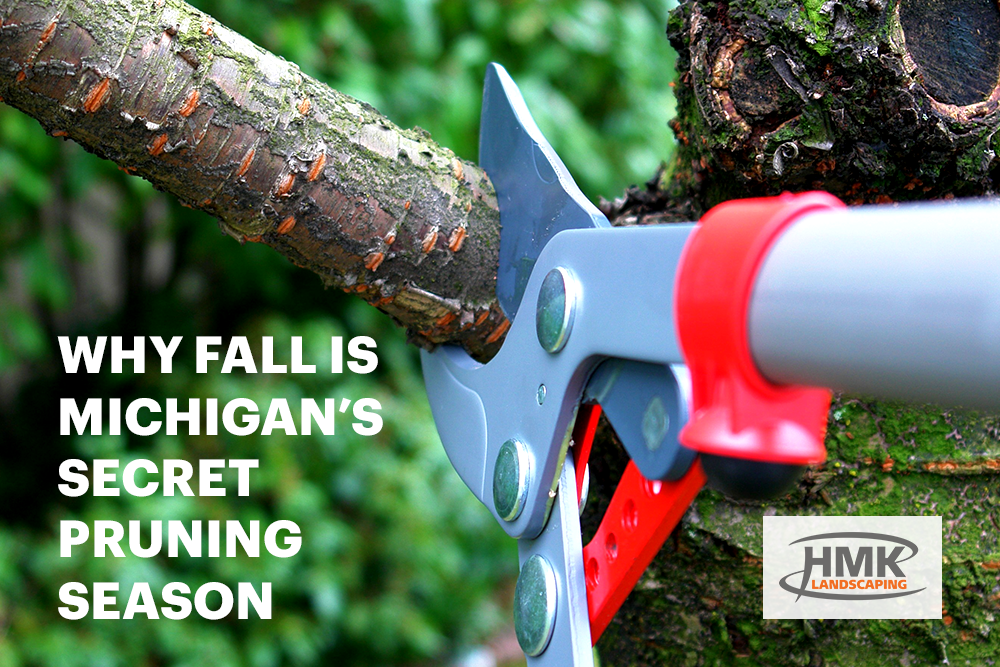
When most people think about pruning trees and shrubs, spring usually comes to mind. But in Michigan, fall is one of the best kept secrets in tree and landscape care. As leaves drop and cooler weather sets in, your trees enter a natural dormancy period that makes it safer, smarter, and more effective to prune. Strategic cuts now can transform the health of your landscape for years to come.
Here’s why fall pruning is so powerful and why it’s worth calling in professionals who know how to do it right.
Trees Slow Down in Fall
In spring and summer, trees are actively growing. Their energy is going into producing leaves, flowers, and fruit, which makes pruning stressful and sometimes damaging. By fall, that energy has shifted. Sap flow slows, leaves drop, and trees prepare for winter dormancy.
Pruning during this quieter phase reduces stress on the plant. Cuts heal more efficiently, and you avoid interfering with critical growth processes. In other words, fall pruning works with the tree’s natural rhythm rather than against it.
More Light, More Air, More Life
One of the biggest hidden benefits of fall pruning is how it improves light penetration and air circulation throughout your yard. When trees and shrubs grow too dense, they create shady damp pockets where problems thrive; from mildew on your lawn to pests hiding in the canopy.
By selectively thinning branches, pruning allows sunlight to reach lower leaves, flower beds, and even your grass. This boosts photosynthesis, helping plants stay healthier and more vibrant into the next season. At the same time, improved airflow reduces moisture buildup that can lead to mold, fungus, and disease.
Think of it this way: a well-pruned tree doesn’t just look balanced it creates a healthier environment for your entire landscape. More light and air mean stronger growth, fewer problems, and a yard that feels open and inviting all year round.
Less Pressure from Pests and Disease
Warm months bring insects, fungi, and bacteria that thrive on fresh pruning cuts. If you trim in summer, those open wounds can attract pests and spread disease. In fall, many of these threats die back or go dormant, lowering the risk dramatically.
That’s especially important in Southeast Michigan, where common problems like oak wilt, fire blight, and apple scab can spread through improper pruning. By choosing fall, you protect your trees from unnecessary exposure.
Clearer View of the Tree Structure
Once leaves drop, you can finally see the true form of your trees and shrubs. This clear view makes it easier to spot:
- Crossing or rubbing branches
- Dead or dying wood
- Problematic growth patterns
- Branches too close to structures or wires
Pruning with bare branches allows for cleaner, more precise cuts and better long-term shaping of your landscape. For design-minded homeowners, this is the time when pruning shifts from maintenance to artistry.
Preparing for Michigan Winters
Michigan winters are no joke. Heavy snow and ice can cause weak or overgrown branches to snap, creating hazards for people, homes, and power lines. Fall pruning strengthens trees before the first storm arrives.
By removing weak limbs, you reduce the risk of breakage. By thinning crowded canopies, you let wind and snow pass through more easily. The result is a yard that’s safer, tidier, and better prepared for whatever winter throws its way.
Common Michigan Trees That Benefit from Fall Pruning
Not all trees respond the same way, but many of Michigan’s most popular landscape species do well with a fall trim.
- Maple trees: removing crossing branches helps them grow stronger.
- Crabapple trees: pruning improves shape and reduces disease risk.
- Spruce and pine: light trimming keeps them dense and symmetrical.
- Ornamental shrubs: hydrangeas, lilacs, and viburnum benefit from careful shaping after blooms fade.
The key is knowing which species to prune now and which to leave until late winter or early spring.
Why DIY Pruning Can Backfire
Pruning looks simple, but it’s easy to do more harm than good. Cutting too much, cutting at the wrong angle, or pruning at the wrong time can permanently damage a tree. Homeowners often underestimate how much weight a single branch carries or how dangerous it is to cut overhead without the right equipment. The difference between DIY pruning and professional pruning is the difference between a tree that struggles and one that thrives.
The Design Advantage of Fall Pruning
Pruning isn’t just about safety and health, it’s also about design. A well-pruned tree complements the overall look of your landscape, frames your home, and creates balance with patios, pathways, and gardens.
Questions to ask yourself before pruning this year:
- How does this tree fit into your landscape design?
- Does pruning open up space for a fire pit, walkway, or outdoor living area?
- Can careful shaping highlight the fall color palette in your yard?
Fall pruning is one of the smartest investments you can make for your Michigan landscape. It improves the beauty of your property, safety, reduces disease risk, and sets your trees and shrubs up for healthy spring growth.